
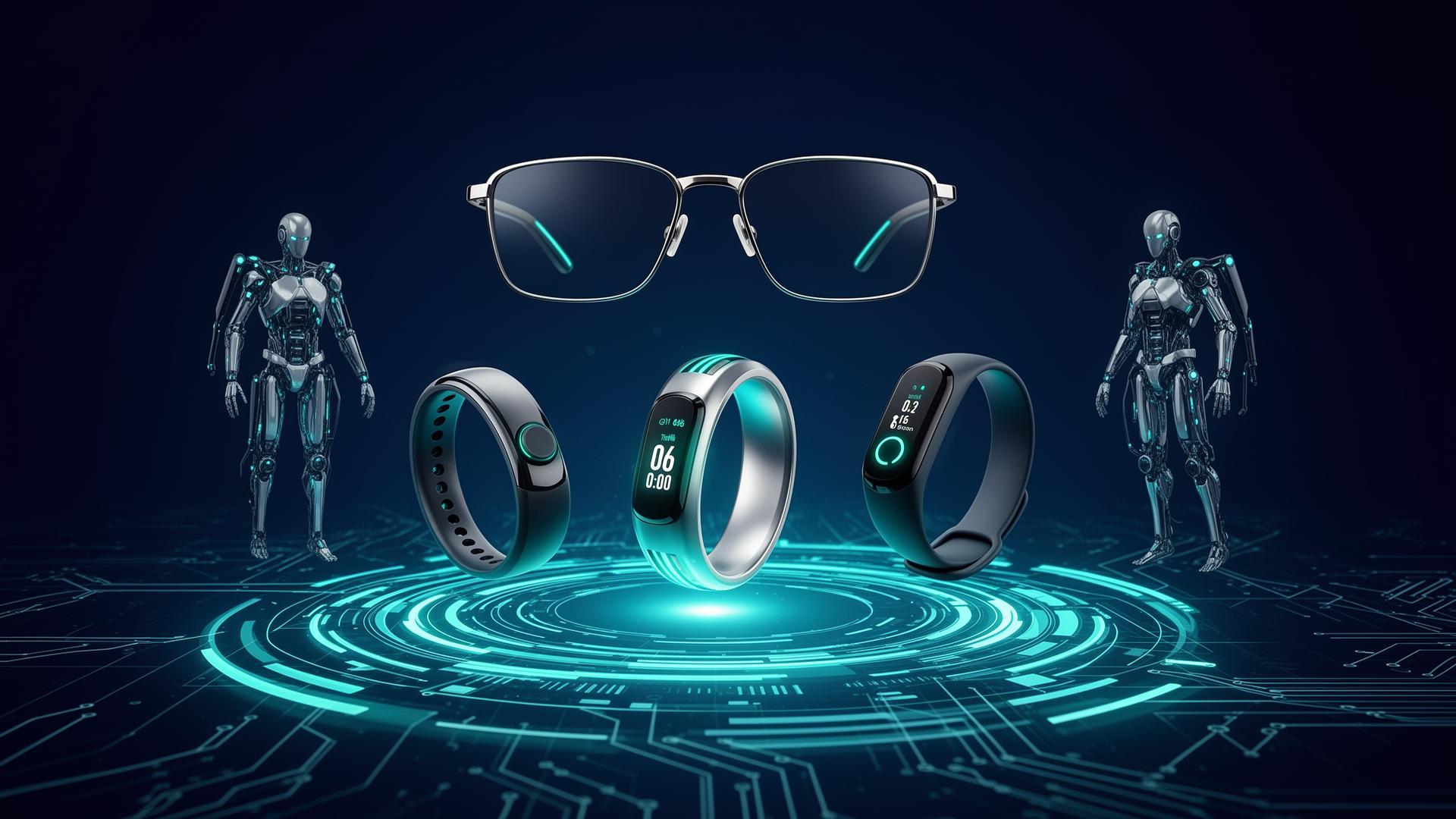
Wearable technology isn't coming – it's here. After attending CES 2026 in Las Vegas and witnessing an explosion of new wearable gadgets, I am convinced that society is on the cusp of a wearable revolution. Smart watches and fitness bands were just the beginning. Today's wearables include AI-powered smart glasses, sensor-laden clothing, smart rings, even lightweight exoskeletons that augment human strength.
These innovations promise to transform how we live and work, offering convenience, health insights, and productivity boosts. Yet with great potential comes great responsibility. As an attorney and legal-tech consultant, I see not only the excitement of these tools but also the unprecedented legal, compliance, and ethical challenges they pose. How prepared are we – lawyers, businesses, and society at large – to deal with this new reality?
In this forward-looking article, we'll explore the emerging implications of wearable tech in workplaces and beyond. From privacy and biometric data concerns to ADA and HIPAA compliance, from future litigation to corporate governance dilemmas, the "wearables revolution" raises complex questions that demand proactive thinking.
The Wearable Tech Revolution in Full Swing
CES 2026 made one thing clear: wearable technology has leapt far beyond step-counters and heart-rate monitors. AI-infused wearables were everywhere on the show floor. Startups and tech giants alike are broadening the scope of wearables beyond fitness and health tracking into new domains like workplace productivity and immersive media.
For example, one CES startup unveiled a smart ring designed for meeting transcription – recording conversations on demand and generating transcripts for professionals. Another demonstrated a futuristic head-worn device integrating a high-resolution display, cameras, and microphones into a hands-free headset. In other words, wearables are no longer just personal wellness gadgets; they are becoming sophisticated tools that augment our senses, memory, and capabilities in real time.
Importantly, many of these new devices leverage artificial intelligence (AI) and ambient computing. Imagine smart AR glasses that can whisper answers in your ear during a meeting, or contact lenses that display contextual data – these are not far-off concepts but real prototypes shown at CES. They see what we see and hear what we hear, blurring lines between human and machine assistance.
"AI's next big interface may well be us, the users. Wearable AI is poised to become the next battleground in tech, bringing powerful benefits but also a host of new risks."
Wearable Tech Innovators at CES 2026
To appreciate the landscape, here is a brief list of notable wearable technology companies present at CES 2026:
- Philips – Healthcare technology leader highlighting next-gen health monitoring wearables and medical-grade fitness trackers.
- Withings – French wellness tech company showing new devices for continuous health tracking.
- Fitbit – Google's wearable brand, exhibiting latest smartwatches with advanced biometric sensors.
- Pebble – Debuting the Pebble Index 01 smart ring that records voice notes and syncs with apps, emphasizing user privacy.
- Amazfit – Presenting the Amazfit Active Max smartwatch with bright AMOLED display and ultra-long battery life.
- Even Realities – AR startup showcasing the Even R1 smart ring, a companion to its G2 smart glasses.
- Ascentiz – Demonstrated the Ascentiz H1 Pro, a lightweight electric-powered exoskeleton.
- Naox – Debuting Naox Link EEG earbuds, a comfortable at-home brainwave monitor.
Privacy and Data Protection Challenges
Perhaps the most immediate concern with modern wearables is privacy. By design, wearable devices collect intimate data continuously: heart rates, sleep patterns, location and movement, biochemical indicators, even audio and video of our surroundings. This biometric and ambient data can be extraordinarily sensitive. Unauthorized access or misuse of such data has already led to serious ethical and privacy concerns.
For instance, many wearable fitness apps have shared or sold personal health information to third-party advertisers without users' knowledge, provoking lawsuits and public outcry. One famous incident involved a fitness app's publicly shared heatmaps unknowingly revealing the locations of military bases, highlighting how even "anonymous" wearable data can expose private or sensitive information.
Key Regulatory Developments
- FTC Health Breach Notification Rule (2024) – Now covers health apps and platforms
- California Privacy Rights Act (CPRA) – Classifies wearable metrics as "sensitive personal information"
- Washington My Health My Data Act – Requires opt-in consent for wearable health data
- Texas & Florida – Stricter controls on biometric and geolocation data
For companies deploying wearables, this patchwork of laws means privacy compliance just became a lot more complex. A single wearable device might be subject to HIPAA in one context, but fall under state consumer privacy laws in another. Best practices include obtaining clear consent from users/employees, minimizing data collection to what is truly necessary, encrypting data in transit and storage, and rigorously controlling third-party access.
Workplace and Employment Law Implications
Wearables are increasingly making their way into the workplace, both voluntarily and through employer initiatives. Many employers see promise in using wearables to improve employee wellness, enhance productivity, and ensure safety. For example, a logistics company might offer smartwatches as part of a wellness program. A factory might deploy sensor-embedded vests or exoskeletons to reduce injuries.
Employee privacy and consent is one major concern. If an employer collects data on an employee's physical activity, heart rate, or sleep through a company-provided wearable, is that an invasion of privacy? Employees may worry that intimate health metrics could be used against them – perhaps inferring a medical condition or pregnancy from biometric data.
Employers must tread carefully to avoid violating laws like the Americans with Disabilities Act (ADA) or the Genetic Information Nondiscrimination Act (GINA). Under the ADA, collecting health-related data from employees can be considered a "medical examination" or inquiry, which generally cannot be required except under specific conditions.
Accessibility and Health Data Considerations (ADA & HIPAA)
Wearable tech also intersects with disability rights and health regulations in important ways. In many respects, wearables can be empowering for people with disabilities. A smart glass that provides real-time transcription can help a deaf employee see conversations. An AI-powered vision enhancement headset could help a low-vision user navigate the world.
Under the ADA, employers have an obligation to reasonably accommodate assistive technologies. For example, if your company has a policy banning recording devices for security, and an individual with a disability relies on a wearable that incidentally records to assist them, you may need to find a reasonable accommodation.
Switching to health data: HIPAA and medical privacy rules come into play when wearable data intersects with healthcare providers or insurance. Not all health-related data is protected by HIPAA. If a consumer uses a wearable on their own to track fitness, that data is generally not HIPAA-regulated. But if a healthcare provider or insurer is involved, the data may become Protected Health Information (PHI).
Future Litigation and Regulatory Outlook
Looking ahead, we can expect new kinds of litigation and legal questions arising from wearable tech. One area is digital evidence. Wearable devices generate an enormous quantity of electronic data – and this data is already finding its way into courtrooms. Years ago, lawyers began using Fitbit data to support personal injury claims.
Now, with even more advanced wearables, we could see their data become standard fare in litigation. Imagine a criminal case where a suspect's smartwatch data is subpoenaed to show location or heart rate spikes at the time of an incident, or a civil case where a plaintiff's sleep tracker undermines their claim of insomnia.
"What happens when a witness testifies while wearing smart glasses that feed them answers? How do we ensure that what we're hearing is untainted, coming solely from the witness's own memory and honesty?"
— Above the Law, AI Legal Beat, January 2026
AI Integration and the LegalTek.ai Perspective
Given the challenges outlined, one might wonder if the same technologies causing disruption – AI and advanced analytics – can also be part of the solution. As a legal-tech consultant and practitioner, I have been working on integrating custom GPT-based AI tools into legal settings. The goal is to leverage AI in a secure, confidential manner to assist with the very kinds of issues we've been discussing.
For example, the deluge of data from wearables could actually become manageable evidence if we deploy AI to help sort, summarize, and flag anomalies. Envision a future e-discovery process where, instead of paralegals manually sifting through years of activity logs, an AI trained on evidentiary rules could quickly identify relevant patterns.
Another area is compliance monitoring. Companies can use AI to ensure they're following the myriad of wearable-related laws. For instance, a custom GPT could be trained on all applicable privacy regulations and then used to review a new wearable program's design for potential legal red flags.
Guidance for Law Firms and Businesses
For Law Firms and Legal Professionals:
- Build Tech Competence and Awareness: Lawyers should educate themselves about how wearables work. This might involve CLE trainings on IoT devices or attending tech conferences.
- Update Policies on Devices and Data: Update internal policies to address wearable devices, including confidentiality protocols and guidelines for employees who use wearables at work.
- Wearables in Litigation – Be Ready: Develop playbooks for common litigation scenarios involving wearables. Train your litigation support staff on how to collect and preserve wearable data.
- Privacy and Compliance Advisory Services: There is a burgeoning advisory opportunity in helping corporate clients craft policies and compliance programs for wearables.
- Leverage AI and LegalTech: Internally, use AI tools to streamline work and stay ahead of regulatory developments.
For Businesses and Employers:
- Create a Wearable Tech Policy: Draft a clear policy covering acceptable use, data handling, and security requirements.
- Wellness Programs – Ensure Voluntariness: Make wearable programs opt-in and offer alternatives for those not comfortable with devices.
- Invest in Data Security and Compliance: Update cybersecurity programs to account for wearable data. Encrypt data and have an incident response plan.
- Consider Workplace Safety and Training: Conduct safety and ergonomic reviews when introducing new wearable devices for employees.
- Monitor the Legal Landscape: Assign someone to keep tabs on new laws and guidance related to wearables.
- Prepare for Litigation: Ensure IT knows how to preserve wearable data if litigation is anticipated. Review insurance coverage.
Conclusion
The coming wearable revolution represents a profound shift in how technology integrates with daily life, business, and the practice of law. We can embrace the future of wearables while also safeguarding privacy, upholding individual rights, and maintaining fair and safe workplaces. It will require thoughtful leadership – the kind that anticipates issues and fosters a dialogue between technologists, lawyers, ethicists, and policymakers. Those who take strategic steps now – updating policies, educating teams, investing in compliance and AI tools – will not only avoid pitfalls but thrive in the new era.
Sources
- Dan Bracaglia, "These are the 7 coolest wearable tech gadgets I tried at CES 2026," Tom's Guide
- CES 2026: Who's Attending & Exhibiting? VisitorsList.com
- Annabelle Shu & Sherri Wang, "Wearable startups present new applications," DIGITIMES Asia (Jan. 9, 2026)
- Hunter H. Moss & Scott C. Hall, "Updates to U.S. Health-Data Privacy and Wearable Tech," Coblentz Law (Sept. 4, 2025)
- Katherine E. Vinez, "The Admissibility of Data Collected from Wearable Devices," Stetson J. Advocacy & Law vol. 4 (2017)
- Jason P. da Silva, "Privacy Data Ethics of Wearable Digital Health Technology," Brown Univ. Center for Digital Health (May 4, 2023)
- Stephen Embry, "Are We Prepared to Deal With the Coming Wearable Revolution?," Above the Law (Jan. 9, 2026)
- LegalTek.ai – Matthew A. Mishak's legal tech consultancy